
June 24–26, 2026 · World Trade Center Metro Manila, Philippines FarmMaster will exhibit its manure fermentation tank at the event.
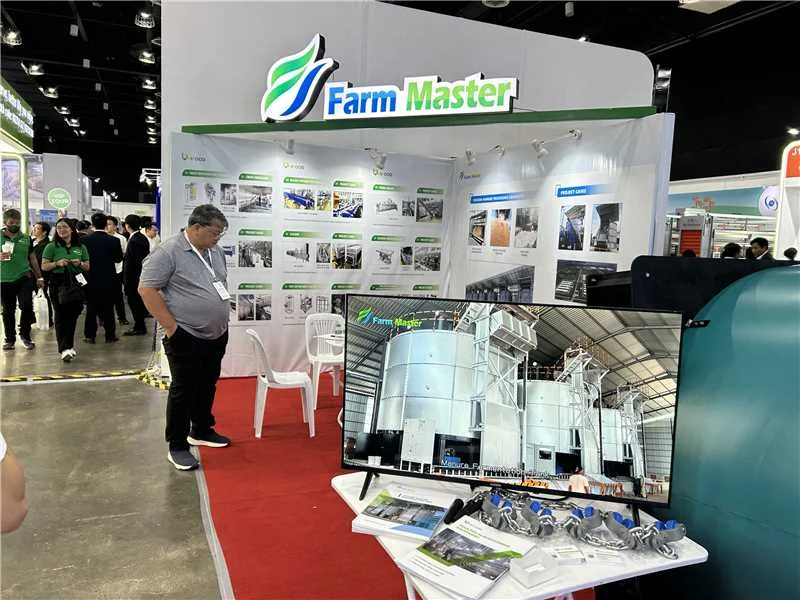
I. Exhibition Overview: The Annual Landmark for Southeast Asian Livestock Industry
LIVESTOCK PHILIPPINES is one of the most influential international B2B exhibitions in the Philippines' livestock, poultry, aquaculture, and feed sectors. Since its inaugural edition in 2011, it has become a core platform connecting local and international exhibitors with decision-makers, large-scale buyers, and technical resources.
The 2026 edition will be held from June 24 to 26 at the World Trade Center Metro Manila (WTCMM), running concurrently with AQUACULTURE PHILIPPINES 2026. The event covers the full industry chain, including animal health, feed processing, breeding, farming equipment, manure treatment and resource utilization, and meat processing. Dozens of technical seminars and industry forums will be held alongside the exhibition, addressing topics such as market trends, sustainable farming, and environmental compliance.
For FarmMaster, this is not merely a brand exposure opportunity—it is a chance to sit down with real customers and "run the numbers" face-to-face.
II. Why We Brought a "Fermentation Tank" to Manila
Livestock and poultry farming are pillar sectors of Philippine agriculture, accounting for nearly half or more of the total agricultural output value. Among these, scaled farming of swine, broilers, and layers has expanded notably in recent years. However, the flip side of scaling is the concentration of manure on limited land—and the Philippine climate makes this challenge even more difficult:
- High temperature and high humidity: Manure piled in open areas rapidly decomposes and emits foul odors. Ammonia gas and fly infestations directly undermine flock health and production performance.Extended rainy season: Open-air composting and manure slurry transport nearly come to a standstill during the rainy season, leaving farms with no place to dispose of manure—a persistent pain point.
- Tightening environmental compliance: Regulatory pressure on discharge, odor, and farm sanitation increases year by year, narrowing the space for extensive treatment practices.Strong demand for organic fertilizer from crop farming: With large planting areas for rice, corn, banana, sugarcane, and other crops, the local supply of organic fertilizer has long fallen short of demand.
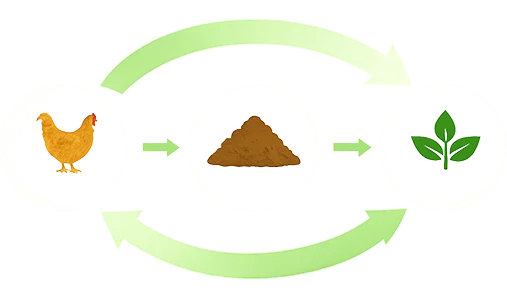
- Against this backdrop, manure is no longer "waste that must be disposed of at a cost," but rathera raw material that can be converted into a marketable product
- —and this is precisely why FarmMaster is featuring its enclosed smart manure fermentation tank at this exhibition.III. Putting the Fermentation Process "Inside a Tank"
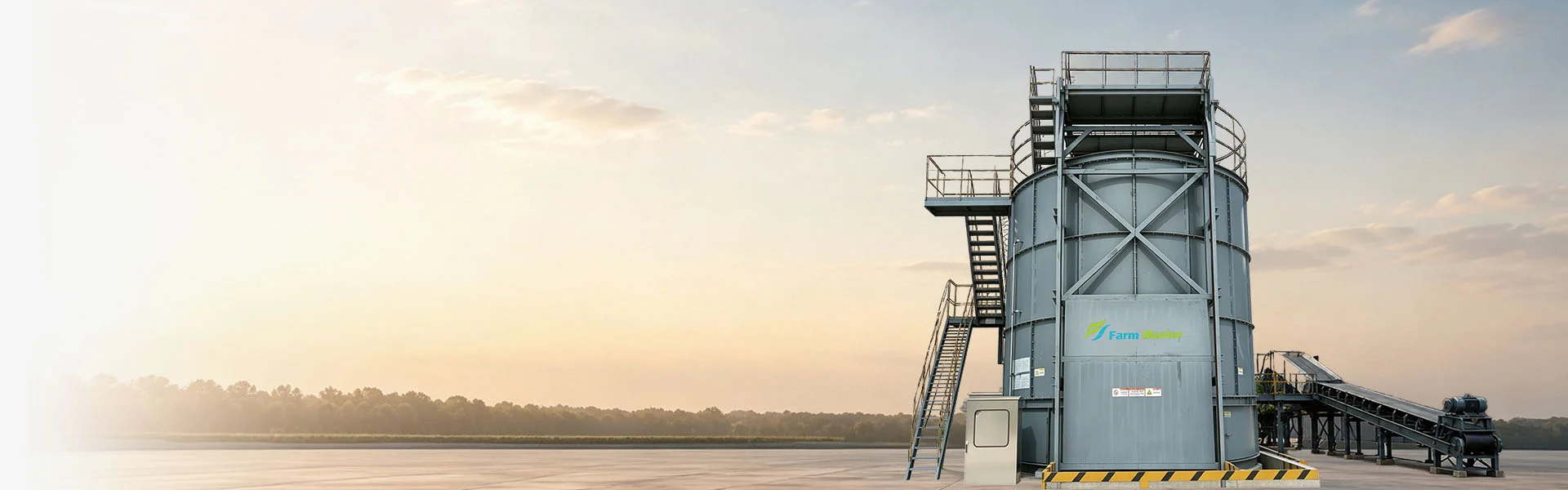
The FarmMaster enclosed smart manure fermentation tank is an aerobic fermentation resource recovery system designed for scaled livestock farms. The core logic is simple: replace open-air windrows with a sealed tank, replace manual turning with automated temperature and oxygen control, and compress the composting cycle from the conventional 30–60 days down to7–10 days.Core Specifications:
Dimension
DescriptionTreatment ModeEnclosed tank aerobic fermentation; internal temperature reaches 60–75°C, effectively eliminating pathogens, parasite eggs, and weed seeds Cycle Efficiency。
Maturation completed in 7–10 days, substantially shorter than traditional windrow composting
| Footprint & Siting | Vertical structure with a small footprint; can be installed on-site near the farm to minimize manure transport |
| Odor Control | Fully enclosed fermentation with centralized exhaust and deodorization, significantly improving odor conditions on-site and in surrounding areas |
| Climate Adaptability | Insulated sealed tank is unaffected by rainfall, typhoon season, or high heat and humidity; operates continuously year-round |
| Automation Level | PLC-controlled temperature, oxygen, and timed agitation; one-touch switching between feeding, fermentation, and discharge; requires only one operator for daily inspection |
| Output Specifications | Discharged material has controllable moisture content and stable organic matter content; can be directly applied to farmland or further processed through simple screening, pelletizing, and packaging for sale as commercial organic fertilizer |
| Model Selection | Effective volume can be configured based on livestock inventory, covering operations from small and medium family farms to facilities with 10,000+ heads or 100,000+ birds [insert model range] |
| Sizing Reference: 10,000 laying hens produce approximately 1–1.2 tons of fresh manure per day, which can be used to calculate the required tank volume and the proportion of bulking agents (sawdust, straw, mushroom residue, etc.) to be added. | IV. The Five Most Frequently Asked Questions from Visitors Over the Three-Day Exhibition |
| Rather than "How much does this machine cost?", we received mostly specific, practical questions. In a sense, these questions offer a snapshot of the current state of manure treatment on Southeast Asian farms. | Q1: How much can one tank process per day? |
| It's not about the machine—it's about the livestock inventory. We work backward from the customer's number of houses, stocking density, and manure removal method (belt / scraper / flush) to estimate daily manure output and moisture content, then determine the tank volume and bulking agent ratio. Moisture content is the key variable—flush systems and dry scraping systems require completely different treatment approaches. | Q2: Will fermentation still work in the Philippines' hot, humid climate? |
Quite the opposite. The sealed tank is self-insulated, so external rainfall and humidity do not affect the internal environment. High ambient temperatures actually help the tank heat up quickly, and with forced aeration and timed agitation, the maturation cycle is more stable and controllable than in temperate regions.
Q3: Will it smell bad? What if neighbors complain?
This is one of the concerns Southeast Asian customers raise most often. The fully enclosed structure combined with centralized exhaust and deodorization (scrubbing / biofiltration) transforms the odor issue from "dispersed" to "controlled"—which is also its most visible advantage over open windrows.
Q4: Can we afford the electricity and labor costs?
The system operates automatically via PLC, with blowers and agitators running intermittently according to process curves. Operating schedules can be optimized based on local electricity tariffs and peak/off-peak periods. Only one person is needed for daily inspection and periodic material replenishment—no dedicated turning crew required. [insert typical installed power / energy consumption per ton]
Q5: Can the organic fertilizer we produce actually be sold?
In the Philippines, the answer is relatively optimistic. The matured organic fertilizer can be supplied directly to nearby rice, corn, banana, sugarcane, vegetable, and fruit plantations as well as nurseries, or bagged and distributed through agricultural input retail channels. At our booth, we walk customers through the math:
treatment cost vs. organic fertilizer sales revenue vs. environmental compliance risk
—and the payback period, when all three factors are considered, is often shorter than customers expect.
Conclusion
系统采用 PLC 自动运行,风机与搅拌按工艺曲线间歇启停,并可根据当地电价与峰谷时段优化运行时段;日常仅需 1 名人员巡检与定期补料,无需专职翻堆班组。【填写典型装机功率 / 吨处理电耗】
Q5:做出来的有机肥,卖得掉吗?
在菲律宾,答案是相对乐观的。腐熟后的有机肥可就近对接水稻、玉米、香蕉、甘蔗、蔬果种植园与苗圃,也可袋装进入农资零售渠道。我们在展台上把这笔账算给客户看:处理成本 vs. 有机肥销售收入 vs. 环保合规风险,三者叠加后的投资回收周期,往往比客户预期更短。
结语
During our three days in Manila, we repeatedly conveyed the same message to clients:
Manure is not a cost center—it is a misplaced asset.
A closed fermentation tank resolves more than just the question of "where does the manure go"—it simultaneously addresses odor and compliance risks, reduces transportation and labor costs, and transforms a daily waste stream into an organic fertilizer product line that generates continuous cash flow.
We thank every friend who visited the FarmMaster booth. For those who were unable to attend in person, please feel free to contact us—we will walk you through everything we presented at the exhibition in full detail.
Contact Information
- Website: www.farm-master.com
- Email:[email protected]
- WhatsApp / Phone: +86 15021175063 / Steven

 中文
中文  EN
EN